A bigger engine: faster large circuits, fast Bode plots, SPICE import, nine new parts
The simulation engine gains a sparse solver and a true small-signal AC analysis, SPICE netlists import for free, nine device families join the catalog, and the engine itself goes open source.
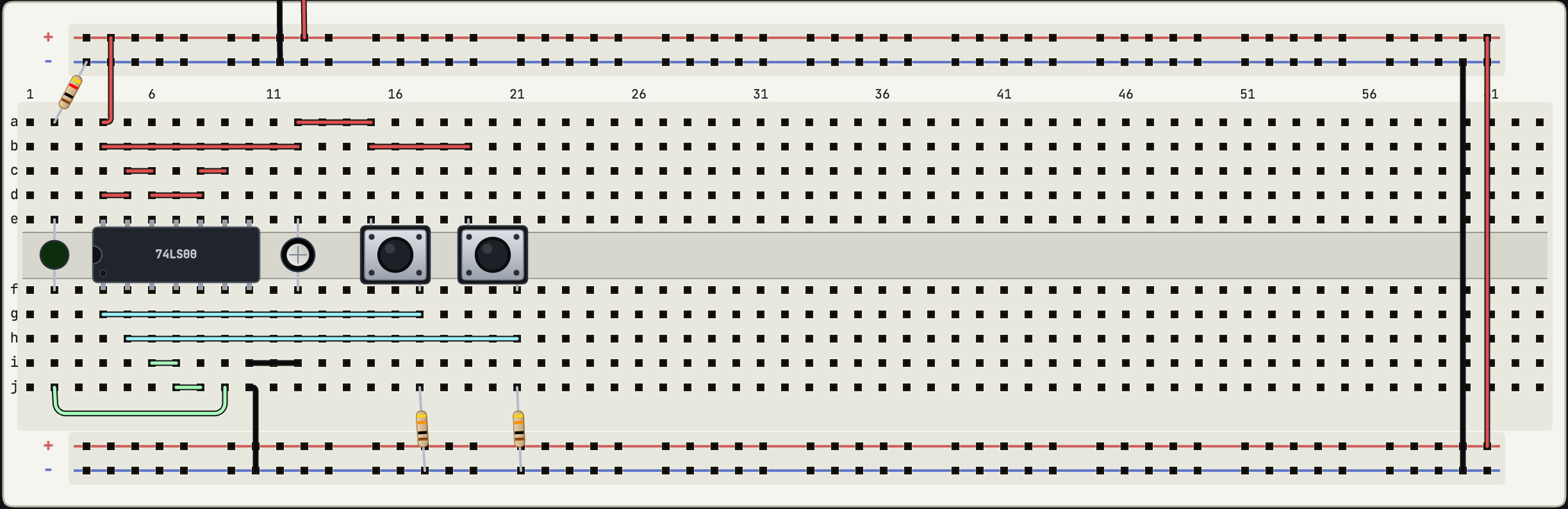
The largest engine release since de:volt launched. Most of it is invisible until you build something ambitious, and then all of it is visible at once.
Large circuits stay fast
The solver now switches to a sparse matrix backend on big circuits. The practical effect: builds that used to crawl past a few hundred nodes keep simulating smoothly into the thousands. On our ladder-network benchmark the large-circuit path runs about 8x faster end to end, and the improvement grows with size. Smaller circuits are byte-for-byte unchanged; the dense path still handles them.
Alongside it, the DC operating point solver gained a rescue ladder for stubborn circuits. Bistable and strongly nonlinear builds that previously failed to find a starting point now converge through progressive techniques borrowed from SPICE practice.
Frequency response, two honest ways
The Sweeps tab's AC analysis now offers a fast small-signal method next to the existing sine sweep. It linearises the circuit about its DC operating point and solves the response directly, which turns a Bode plot from a minutes-long sweep into an instant answer, exact for linear circuits. The trade-offs are stated in the panel: a linearisation cannot show clipping or slew, and it is unavailable when a microcontroller is present, because running firmware has no small-signal model. The sine sweep stays for when you want large-signal truth at each frequency point. Sweeps remain a Pro feature; the method choice is yours.
Import a SPICE netlist, free, for everyone
File → Export… now has an Import SPICE netlist row that takes a .cir, .net, or .sp deck and rebuilds it as a breadboard circuit: parts placed automatically, values carried exactly, supply nets routed to the rails. Netlists are electronics' lingua franca, textbooks and course handouts are full of them, and now they paste straight onto a board you can probe. Decks using devices the catalog cannot place are rejected by name rather than approximated silently.
Nine parts that used to say no
New in the palette: N-Channel JFET, P-Channel JFET, Thyristor (SCR), Triac, Analog Switch, Transformer, Current Source, 16 MHz Crystal, and the 4N35 optocoupler. Each carries a datasheet page, honest model disclosures, and parameters cross-checked against real device data. SCR latching, triac firing quadrants, transformer coupling, and crystal resonance all behave, which opens up phase-control, isolation, and oscillator circuits that simply could not be built here before.
The engine is open source
The mathematics under all of this now lives in brownout, an MIT-licensed npm package extracted from de:volt's engine, with the app consuming the same package you can install. If you want transient analysis, small-signal AC, or SPICE parsing in your own project, npm install brownout gets you the exact solver this simulator runs, cross-validated against ngspice. de:volt itself is unchanged by the extraction; the engine just exists in public now.
Fixes and improvements
- Board-image exports crop to full component bodies, so wide parts no longer clip at the edges.
- Camera fit accounts for labels and annotations at the board's edge.
The two AC methods and their limits are documented at docs.devoltapp.com/user/oscilloscope-and-analysis, and the new parts each have a page under docs.devoltapp.com/parts.